

Refractory manufacturing facility
- $90,000 in Save on Energy incentive funding secured
- $55,000 in annual energy savings at current Ontario hydro rates
- 294 CFM returned to the compressed air generating station
- 45 kW in compressor motor power conserved
- Extended air compressor service intervals
- Improved compressed air quality with visual dew point monitoring
- Air Dryer Desiccant Regeneration, on an “as and when required” Dewpoint dependent energy saving controller
Technical scope:
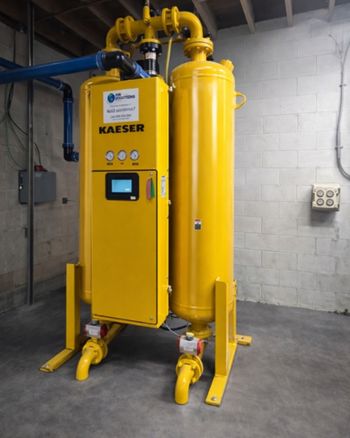
To support the facility's production and furnace reliability requirements, we specified and installed a new compressed air treatment system built around Kaeser equipment.
- Desiccant Dryer:
-
- 1 x Kaeser KBD Blower Purge Desiccant Dryer
-
Filtration:
-
Lower differential pressure filtration assemblies, upstream and downstream of the dryer
-
-
Controls and Dew Point Management:
-
Dew point switching control, regenerating desiccant as and when needed
-
Visual display of compressed air pressure dew point for operators
-
-
Condensate and Drain Rationalization:
-
Timed solenoid drain traps removed and replaced with appropriate zero compressed air loss, demand-drain solutions
-
The Result
A massive 294 CFM was returned to the compressed air generating station, conserving an unbelievable 45 kW in compressor motor power and delivering $55,000 in annual energy savings at current Ontario electricity rates.
Air compressor service intervals will be extended, with less compressed air being generated and fewer running hours occurring on the rotary screw compressors. Operators now have a visual display of the compressed air pressure dew point, drain alarm notifications, and filter element conditions. Lower pressure drop and greater oil and particulate removal result in improved compressed air quality and pressure throughout the plant.
With $90,000 in incentive funding secured, the plant's leadership team now has a clear before-and-after story backed by real data. The numbers speak for themselves.
Related products
Blowers
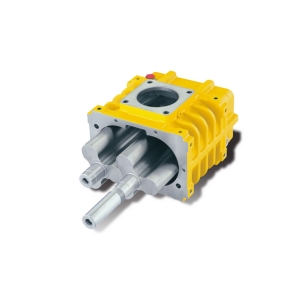
Kaeser blowers are built for a lifetime of high performance, low energy costs, and best in class performance, with flow rates between 170 ICFM and 2603 ICFM.
Dryers
Selecting the right dryer and filtration to ensure your facility receives clean, dry compressed air consistently, depends on many things. Our clean air selection process is based around ISO 8573.1 quality class standards.
Condensate Management
Disposing of the compressed air oil/water condensate byproduct, created by your compressor station, carries big legal, and environmental responsibilities. The person knowingly discharging oil to drain, is responsible.
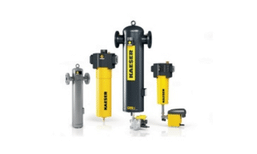
Filters
If you are looking for assistance in the filtration of dirt, oil, water, bacteria, hydrocarbons, oil odor or vapor, we have a filter, or an element to capture unwanted contaminants you need to stop. Compressed air, inert gases, liquids, ambient air, and water filtration is what we do best.
The ultimate guide on rightsizing your compressed air system
Choosing the right compressed air system is crucial to minimize the total cost of ownership. How do you calculate the air demand in flow rate (CFM) and pressure (PSIG), what's the power requirement (V), and how does that translate in a compressed air system with one or more compressors (hp)?
Download our Comprehensive Guide for Choosing the Right Compressor Size!